|
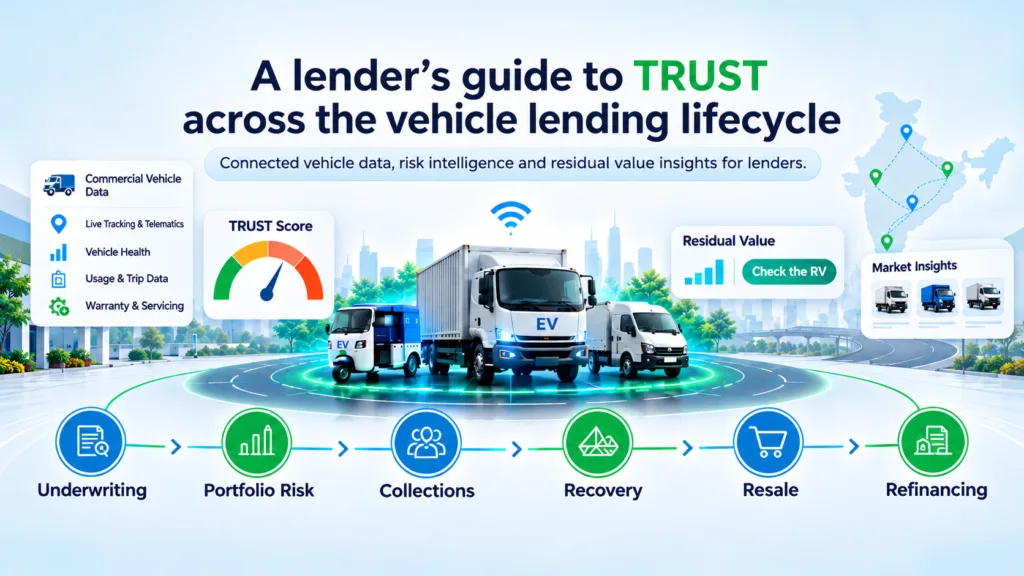
A lender’s guide to TRUST across the vehicle lending lifecycle
India recorded 3.33 lakh EV retail sales in September 2026, up 74% year on year. Electric three-wheeler sales grew 40% to 86,024 units, according to FADA data. www.ibef.org
For lenders expanding their commercial EV portfolios, vehicle information serves several teams. Credit needs evidence to assess the model being financed. Risk teams need to follow its performance during the loan. Recovery teams need to locate the vehicle and understand what it may be worth based on the Residual Value.
TapFin TRUST brings connected vehicle data across OEM and IoT systems into one platform for lenders. The operating history gathered during the loan remains available as the account moves from monitoring to collections, recovery or resale.
Residual value is central to that continuity. TRUST updates its estimated asset value as usage and condition change, helping lenders assess the collateral behind their exposure throughout the loan.
1. Underwriting with OEM performance and asset value in view
TRUST gives credit teams access to the performance of connected vehicles across OEMs and models. They can review how comparable assets are being used and how their condition is holding up in the markets they intend to finance.
The residual value module adds an estimate of asset value to that review. Together, these inputs support decisions on OEM whitelisting and the proposed financing terms, alongside the borrower’s credit assessment and lender policy.
For the credit team, the practical uses include:
- Evaluating an OEM or model using evidence from vehicles already in operation.
- Reviewing LTV and tenure against asset health and expected value retention.
- Supporting asset verification before disbursal with available connected vehicle information.
For example
A lender considering a cargo three-wheeler can examine comparable vehicles operating in its target market. The team can use that evidence when assessing the model for its lending policy and deciding the terms it is prepared to offer.
2. Following portfolio risk through the TapFin Score
After disbursal, TRUST’s risk dashboard gives the team an overview of the portfolio through the TapFin Score. It can then examine the borrower or individual vehicles behind a change.
Early warnings and performance reports help the team identify assets that need attention and follow how their condition is changing. This matters where an overall fleet view conceals a problem within a smaller group of vehicles.
A borrower’s total activity may appear stable, for instance, while vehicles in one location become less active. TRUST lets the risk team examine that group and prepare a specific follow-up with the borrower.
The residual value assessment adds the collateral perspective. When asset health deteriorates, the team can review what that means for estimated value and the exposure it supports.
3. Giving collections teams context before outreach
The same borrower view supports collections. Teams can review recent vehicle performance and the issues identified during monitoring before making contact, including cases where operating changes warrant outreach before an EMI is missed.
For an overdue account, the team can examine whether the financed vehicles remain active or whether there has been a disruption. That information helps make the discussion specific to the borrower’s fleet and the period concerned.
For example
A borrower says vehicle downtime affected their EMI payment. The collections team can review activity during that period, identify the vehicles concerned and check the reported downtime before following up.
That operating history also provides context when credit and collections teams discuss whether an account needs further review for restructuring or recovery.
4. Supporting recovery with tracking and current asset information
When recovery is required, teams can use TRUST to track a vehicle’s live GPS location and check where it is most often found based on trip history. A shareable tracking link lets field agents follow its location and coordinate the recovery visit.
Where supported, authorised teams can also use remote immobilisation within the lender’s recovery process.
The lender can review recorded asset condition and current estimated value alongside the recovery plan. If a vehicle is deteriorating, those records help the team consider what further delay may mean for expected sale proceeds.
Need EV asset visibility?
From live tracking to operational risk monitoring, TapFin TRUST helps lenders stay connected to portfolio performance beyond disbursement.
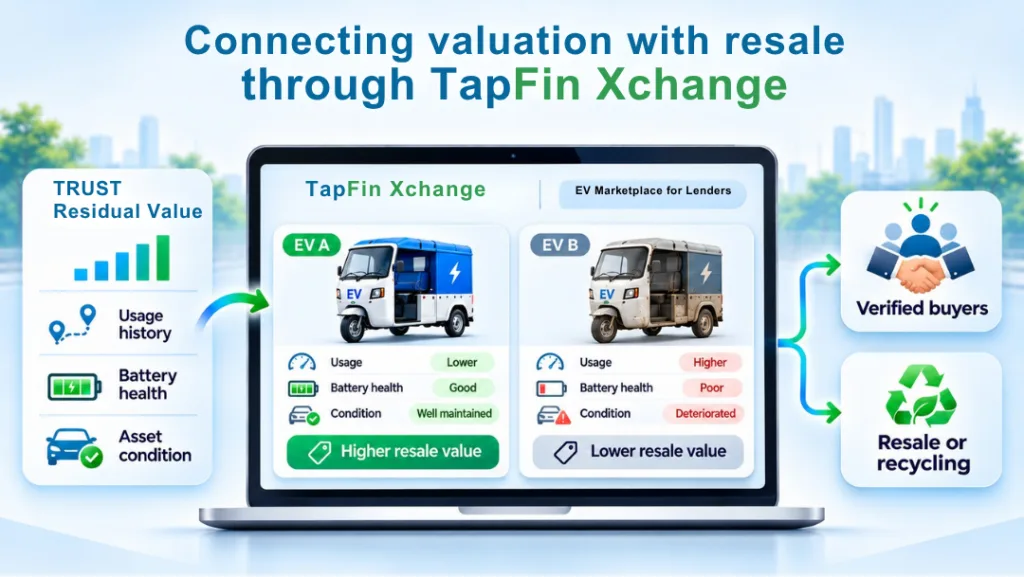
5. Connecting valuation with resale through TapFin Xchange
Once a vehicle is recovered, TRUST’s residual value module supports a current valuation review. Available usage and battery health history help explain its condition and inform resale expectations.
TapFin Xchange gives lenders a marketplace to list repossessed or surplus vehicles and connect with buyers. The lender can bring the asset assessment into the resale discussion, giving prospective buyers more information to evaluate.
For example
Two repossessed EVs have the same model and registration year, but one has recorded heavier usage and poorer battery health. Their histories help the lender assess them separately before setting sale expectations and listing the inventory.
For ageing EVs, battery health and remaining useful life information can also inform whether resale or recycling is appropriate. The eventual sale price depends on condition and buyer demand.
6. Bringing the operating history into refinancing
If the vehicle is considered for another loan, TRUST provides its current estimated residual value alongside available health and usage history.
Credit teams can use that assessment when reviewing the proposed loan amount, LTV, pricing and tenure. A vehicle that has experienced heavy commercial use can be assessed on its recorded condition today, with the changes since its original financing taken into account.
Relationship managers can also review the borrower’s existing financed assets before discussing repeat financing. The information collected during the first loan remains useful in assessing the next proposal.
Still waiting for an EMI to bounce before taking action?
Book a TRUST demo to see how changes in vehicle performance and asset value can help your team identify accounts that need attention earlier.
Connect with TapFin
Reach out to us